

Why Your Car Still Feels Hot After Tinting — Explained Simply
Many car owners install window tint expecting a cooler cabin—only to feel disappointed when the heat still seems to come through. If this sounds familiar, you’re not alone.
The truth is, window film performance depends on several factors, and not all tint delivers the same results. This guide explains why your car may still feel hot after tinting—and what actually makes a difference in real-world driving conditions.
1. Not All Window Films Block Heat Effectively
One of the most common reasons is simple: the film installed may not have strong heat rejection performance.
Some entry-level films focus mainly on:
Darkening the glass (low Visible Light Transmission or VLT)
Improving appearance
Basic glare reduction
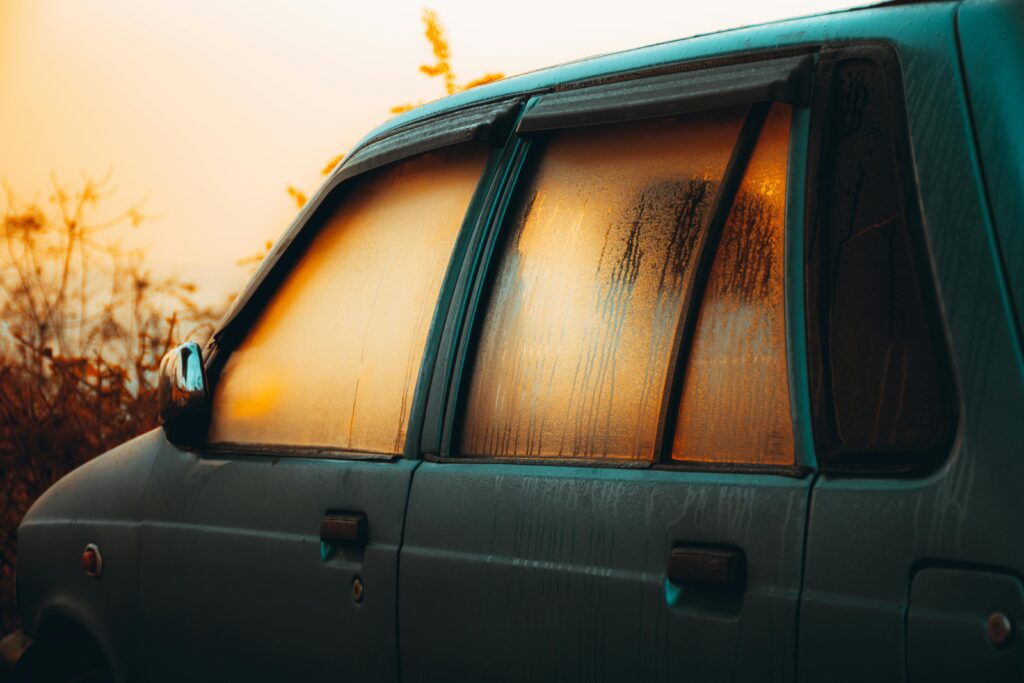
What this means: Heat comes mainly from infrared (IR) radiation, not visible light. A dark film can still feel hot if it doesn’t block IR effectively.
2. Misleading IR Numbers (Marketing vs. Reality)
Many films today advertise high specs like 90%, 95%, or even 99% IR rejection. However, these numbers can be misleading for the average consumer.
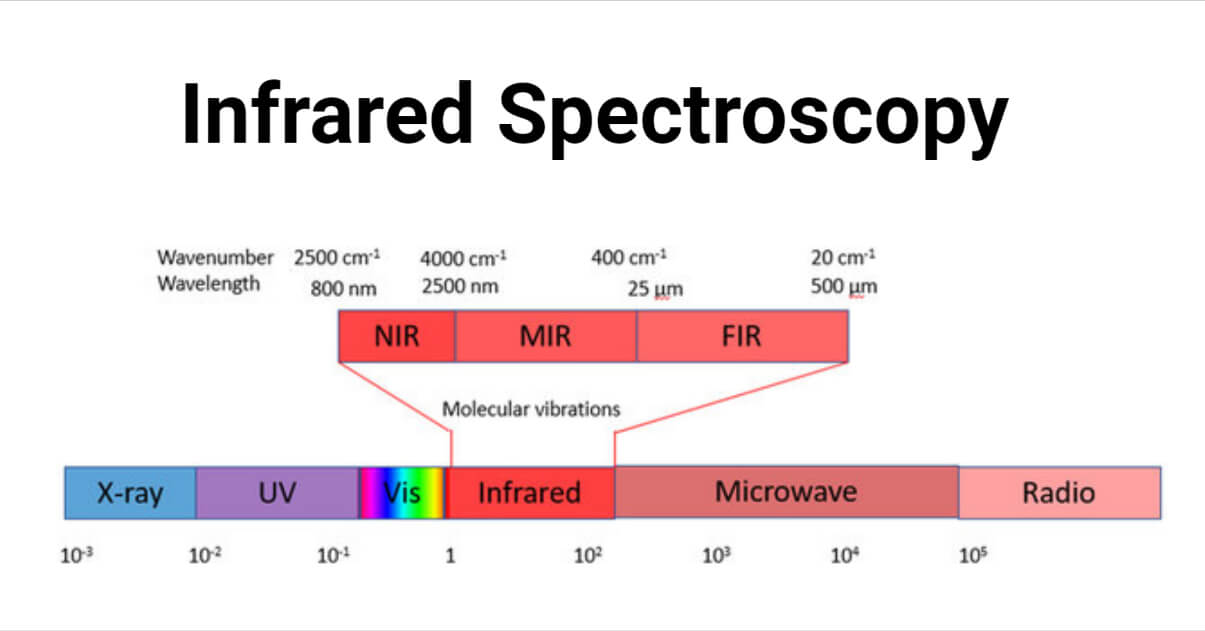
Why? Some manufacturers measure IR performance at a single wavelength (e.g., at 900nm or 1400nm), rather than across the full infrared spectrum. In real-world conditions:
Heat comes from a wide range of IR wavelengths.
A film that performs well at one specific point in a lab test may not perform equally well under the intense, broad-spectrum Malaysian sunlight.
👉 This is why some cars still feel hot despite having “high IR specs” on paper.
3. The Front Windshield Is the Biggest Heat Source
A critical factor many people overlook is that most of the heat enters through the front windshield.
Reasons:
It has the largest surface area of any glass panel in your vehicle.
It faces direct sunlight while you are driving.
It often uses a lighter tint (higher VLT) for safety, visibility, or legal requirements.
Common Mistake: Installing high-performance film on side windows but using lower-performance film—or none at all—on the front windshield. This leaves the largest “gateway” for heat wide open.
4. Heat Comes from More Than Just Windows
Even with premium window film, your car can still feel warm because heat enters through other sources that tint cannot control:
The Dashboard: It absorbs direct sunlight and radiates heat into the cabin.
The Car Roof: Without proper insulation, the metal roof heats up and transfers heat downward.
Engine Heat: After a long drive, engine heat can soak into the cabin.
Trapped Air: When parked outdoors, air becomes trapped inside and reaches high temperatures regardless of the tint.
Window film significantly reduces solar heat gain, but it cannot eliminate all environmental heat sources.
5. Ultra-High IR Films May Trade Off Clarity
Some films push for extreme IR rejection (97%–99%). To achieve this, manufacturers often increase nano-particle density or multi-layer complexity.
This can sometimes lead to:
Slight Haze or Milkiness: Visible in certain lighting or when the sun hits the glass at a specific angle.
Reduced Optical Clarity: This can be distracting, especially during night driving or in heavy rain.
👉 A film that balances high heat rejection with optical clarity often provides a better real-life experience than one chasing extreme laboratory numbers.
6. Installation Quality and Coverage
Even the highest-quality film can underperform if the installation is subpar. Common issues include:
Improper Adhesion: Affecting the film’s ability to perform consistently.
Gaps or Edge Lifting: Small gaps can allow heat and UV rays to bypass the protected area.
Incorrect Selection: Using a film that isn’t optimized for the specific curvature or type of glass.
Professional installation ensures proper coverage and ensures the film performs at its maximum capability for years.
7. Expectations vs. Reality
Window tinting is a major upgrade for comfort, but it is important to manage expectations.
What tint CAN do: Dramatically reduce heat buildup, improve air-conditioning cooling efficiency, lower glare, and protect your skin and interior.
What tint CANNOT do: Make your car instantly cold under direct sun, replace the need for air-conditioning, or block 100% of thermal energy.
Final Thoughts: What Actually Works?
If your car still feels hot after tinting, it usually means there is a gap in the setup, the film’s real-world spectrum performance, or the coverage. To achieve the cooler cabin you expected, focus on:
Broad-Spectrum IR Performance: Look for films that reject heat across the entire infrared range.
Full Coverage: Prioritize high-performance film for the front windshield.
Balanced Specs: Choose a film that offers a high Total Solar Energy Rejection (TSER) without sacrificing optical clarity.
Professional Installation: Ensure your film is installed by experts to get the long-term value you paid for.

