
Choosing the Right Office Glass Solution
1. Why Do Office Glass Partitions Need Decorative Film?
Glass partitions are increasingly common in modern offices. They allow natural light to flow through the space, create a more open environment and give the workplace a clean, contemporary appearance.
However, completely transparent glass may not always be suitable for every area.
Meeting rooms, management offices and private workspaces often require a certain level of visual privacy without losing the benefits of natural light.
Frosted Film and Decorative Film offer practical ways to change the appearance of existing glass without replacing the glass panels.
Although both are applied to glass surfaces, they serve different design purposes.
2. What Is Frosted Film?
Frosted Film is a popular glass decoration material that creates a translucent, frosted appearance.
It reduces clear visibility through the glass while allowing natural light to enter the space.
Key features include:
Improved visual privacy: Reduces direct visibility through glass.
Natural light: Allows daylight to pass through without leaving the glass completely transparent.
Clean appearance: Suitable for modern offices, meeting rooms and commercial spaces.
Flexible designs: Available in full frosting, partial frosting, horizontal stripes and customised patterns.
For offices that prefer a simple and professional appearance, Frosted Film is often a practical choice.
However, frosted film provides visual screening rather than complete privacy. The actual effect depends on the film’s light transmission, coverage area and lighting conditions on both sides of the glass.
3. What Is Decorative Film?
Decorative Film offers a wider range of design possibilities than standard frosted film.
Rather than simply changing the transparency of glass, it uses different colours, patterns, textures and printed designs to make glass part of the interior design.
Common options include:
Patterned Film
Geometric shapes, lines and repeating patterns that add visual detail to glass surfaces.
Gradient Film
Gradually changing transparency that provides partial visual screening while maintaining a sense of openness.
Printed Film
Custom graphics, text or company logos can be incorporated into the design to reflect a business’s brand identity.
Custom Decorative Film
Customised colours, patterns and visual effects designed to match the interior style and glass dimensions of a particular project.
For offices looking to create a distinctive environment or incorporate branding into their interior design, Decorative Film offers greater creative flexibility.
4. Frosted Film vs Decorative Film: Which Should You Choose?
Neither option is necessarily better than the other. The right choice depends on the intended function and design requirements.
| Comparison | Frosted Film | Decorative Film |
|---|---|---|
| Main purpose | Visual privacy | Interior decoration and design |
| Appearance | Simple, frosted finish | Various patterns and designs |
| Design options | Relatively simple | Colours, textures, printing and custom designs |
| Light transmission | Depends on film and coverage | Depends on design and material |
| Branding | Basic logos or markings | More extensive brand integration |
| Common applications | Meeting rooms and office partitions | Commercial spaces, reception areas and branded interiors |
If the main requirement is visual privacy with a clean and simple appearance, Frosted Film is usually sufficient.
If the glass partition also needs to contribute to interior decoration, visual identity or company branding, Decorative Film offers more possibilities.
The two can also be combined. For example, a meeting room can feature frosted sections with a customised company logo or graphic design.
5. What Should You Consider Before Installing Decorative Film?
The final appearance of decorative film depends not only on the material, but also on proper planning and installation.
1. Glass Dimensions and Coverage
Accurate glass measurements are essential before installation. For projects involving multiple glass panels or continuous patterns, the design alignment between panels should also be planned.
2. Privacy Requirements
A narrow frosted strip provides only partial visual screening. If greater privacy is required, the coverage area and suitable film type should be considered carefully.
3. Design and Interior Coordination
Colours, patterns and textures should complement the office’s interior style, furniture and lighting. For custom printed designs, artwork, dimensions, proportions and installation positions should be confirmed in advance.
4. Installation Quality
Glass cleaning, accurate cutting, pattern alignment and edge finishing all affect the final result. Custom designs involving company logos or continuous patterns require careful planning and professional installation.
6. Make Glass Part of Your Interior Design
Glass partitions do not always need to remain completely transparent.
With Frosted Film or Decorative Film, existing glass can be enhanced with greater visual privacy and a more customised appearance while maintaining the benefits of glass partitions.
Whether it is a simple frosted finish, a modern geometric pattern or a customised design featuring your company branding, the key is choosing a solution that suits the purpose of the space.
Tint n’ Wrap provides professional installation services for Frosted Film, Decorative Film and customised printed window film.
From residential properties and offices to commercial spaces, we help select suitable materials and installation solutions based on actual glass dimensions, space requirements and design preferences.
Planning an office glass partition or looking to improve the privacy and appearance of existing glass?
Contact us to discuss your project.
Tint n’ Wrap
Professional Window Film & Architectural Film Installation
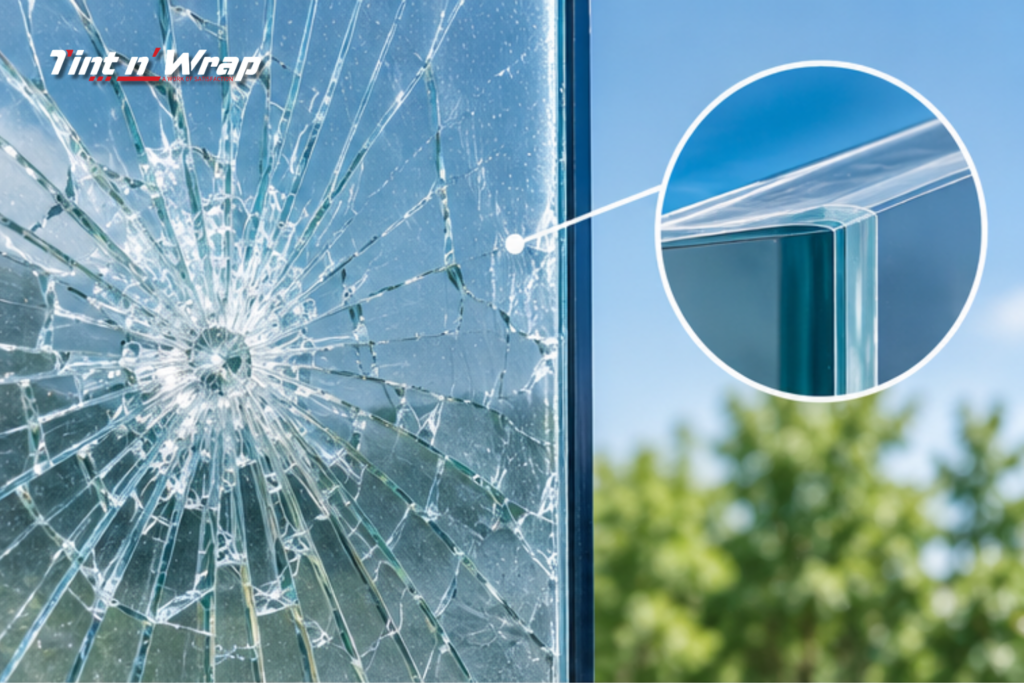
Its protective function mainly involves two aspects:
1. Helping Hold Broken Glass Fragments Together
When glass breaks, the film’s tensile strength and adhesive bond help keep fragments attached to the film layer. This can reduce the likelihood of broken pieces falling or scattering freely.
2. Reducing the Risk of Flying Glass
Under suitable product and installation conditions, safety film can help reduce the amount of glass released during breakage.
This helps make the aftermath of glass breakage more manageable and may reduce certain risks associated with flying fragments.
However, actual performance depends on several factors, including film thickness, film construction, adhesive strength, glass type, installation method and impact conditions.
Not all safety films provide the same level of protection.
3. Can Safety Window Film Prevent Glass from Breaking?
This is one of the most common misunderstandings among consumers.
Safety Window Film does not make glass unbreakable.
Its primary function is to help manage broken glass fragments after breakage. It does not guarantee that the glass will remain intact when subjected to sufficient force.
To understand the difference, consider these three types of glass systems:
Ordinary Glass: Can break when subjected to sufficient impact or stress, potentially producing loose fragments.
Glass with Safety Film: The glass can still break, but the film may help hold fragments together and reduce scattering.
Laminated Glass: Uses an interlayer bonded between glass sheets. When the glass breaks, fragments generally remain attached to the interlayer.
These systems have different constructions and protective characteristics.
For projects with higher requirements for impact resistance, intrusion resistance or fall protection, ordinary safety film alone may not be sufficient.
A suitable glazing system should be selected based on the actual risks, applicable standards and project requirements.
4. Where Is Safety Window Film Commonly Used?
Safety film can be considered for different types of architectural glass. However, its suitability should always be assessed according to the glass construction, installation environment and intended level of protection.
Residential Windows
Safety film can help reduce the risk of loose glass fragments after accidental breakage, adding another layer of protection to residential environments.
Office Glass Partitions
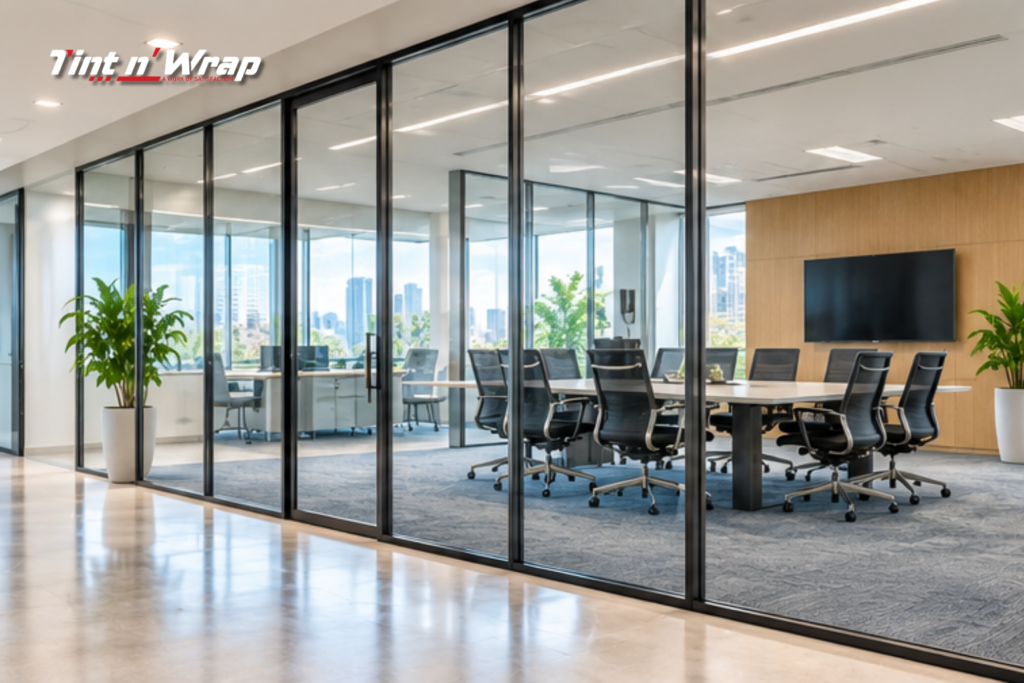
Glass partitions are common in modern offices. Applying safety film can help manage broken glass fragments if accidental breakage occurs.
Shopfronts and Glass Doors
Commercial premises often have frequent customer and staff movement. Broken glass doors or shopfront panels can create hazards for people nearby.
Lift Glass Panels
Some lift installations use glass for decorative or enclosure purposes. Since these applications involve specific structural and installation conditions, the glass type and intended use should be assessed before selecting a suitable safety solution.
5. What Should You Consider When Choosing Safety Window Film?
Safety films are available in different thicknesses, material constructions and performance specifications.
Choosing the right product should involve more than simply comparing MIL ratings.
Here are several important factors to consider:
1. Film Thickness
Safety film thickness is commonly measured in MIL. Different thicknesses may offer different levels of tensile strength and overall film performance.
However, a thicker film does not automatically guarantee better protection in every application.
2. Film Construction and Tensile Strength
Apart from thickness, the material’s strength, flexibility and durability are also important.
These characteristics influence how the film performs when the glass breaks and how well it helps retain the fragments.
3. Adhesive System
The adhesive is an important connection between the film and the glass.
Even if the film itself has good tensile strength, the overall protection depends on how effectively the adhesive system maintains its bond with the glass.
4. Glass Compatibility and Installation Method
Different glass types, including annealed glass, tempered glass and laminated glass, have different structures and breakage characteristics.
Certain safety applications may also require an edge attachment system to help secure the filmed glass under specific conditions.
Therefore, product selection and installation methods should be matched to the actual glass conditions rather than based on product specifications alone.
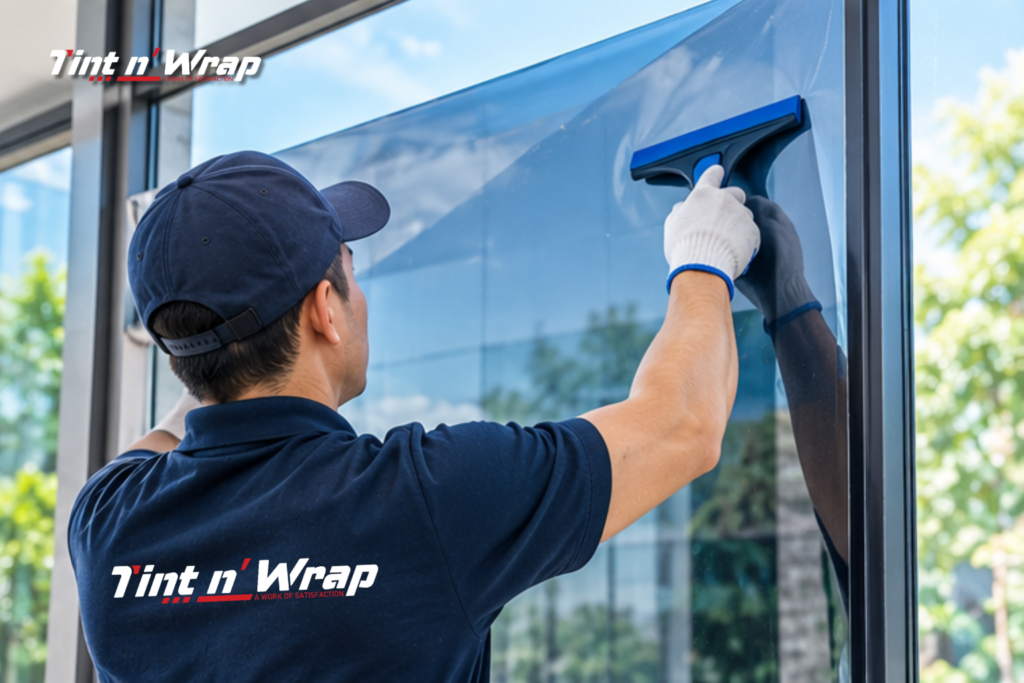
6. Why Are Professional Assessment and Installation Important?
The performance of safety window film does not depend on the product alone. The existing glass condition and installation quality also play important roles.
Before installation, several factors should be assessed:
Existing glass type and thickness
Glass dimensions and installation location
Surrounding environment and potential risks
Required level of safety protection
Whether an additional edge attachment system is necessary
For large glass panels, public spaces and projects with specific safety requirements, the film and installation method should be selected according to the actual application.
Where intrusion resistance, fall protection or other specialised safety performance is required, the relevant testing standards and complete glazing system must also be considered.
Professional installation is not simply about applying film to glass. It is about ensuring that the selected product, glass conditions and installation requirements work together appropriately.
7. Adding Another Layer of Protection to Architectural Glass
Glass brings natural light, openness and modern design to buildings. However, the potential risks associated with broken glass should not be overlooked.
Safety Window Film provides one way to improve the management of broken glass fragments.
It does not make glass unbreakable, nor does it replace every type of specialised safety glazing system. However, under suitable application conditions, it can form part of a building’s overall glass safety solution.
Tint n’ Wrap provides Safety Film materials and professional installation services for residential, office, commercial and architectural glass applications.

We assess the existing glass conditions and project requirements to help determine a suitable safety film solution.
If you are considering adding safety protection to your building’s glass, contact us to discuss your project.
Tint n’ Wrap
Professional Window Film & Architectural Film Installation

