
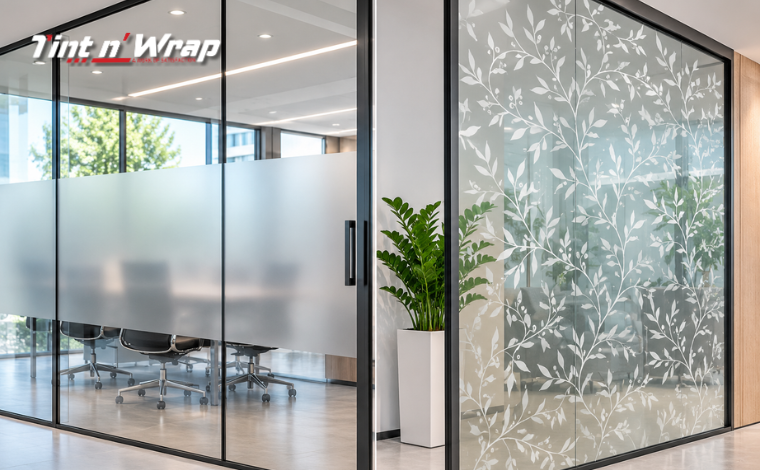
Choosing the Right Office Glass Solution
1. Why Do Office Glass Partitions Need Decorative Film?
Glass partitions are increasingly common in modern offices. They allow natural light to flow through the space, create a more open environment and give the workplace a clean, contemporary appearance.
However, completely transparent glass may not always be suitable for every area.
Meeting rooms, management offices and private workspaces often require a certain level of visual privacy without losing the benefits of natural light.
Frosted Film and Decorative Film offer practical ways to change the appearance of existing glass without replacing the glass panels.
Although both are applied to glass surfaces, they serve different design purposes.
2. What Is Frosted Film?
Frosted Film is a popular glass decoration material that creates a translucent, frosted appearance.
It reduces clear visibility through the glass while allowing natural light to enter the space.
Key features include:
Improved visual privacy: Reduces direct visibility through glass.
Natural light: Allows daylight to pass through without leaving the glass completely transparent.
Clean appearance: Suitable for modern offices, meeting rooms and commercial spaces.
Flexible designs: Available in full frosting, partial frosting, horizontal stripes and customised patterns.
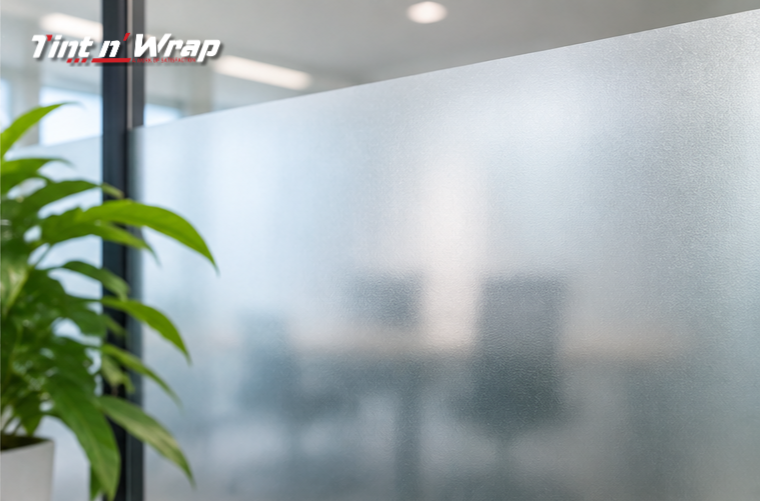
For offices that prefer a simple and professional appearance, Frosted Film is often a practical choice.
However, frosted film provides visual screening rather than complete privacy. The actual effect depends on the film’s light transmission, coverage area and lighting conditions on both sides of the glass.
3. What Is Decorative Film?
Decorative Film offers a wider range of design possibilities than standard frosted film.
Rather than simply changing the transparency of glass, it uses different colours, patterns, textures and printed designs to make glass part of the interior design.
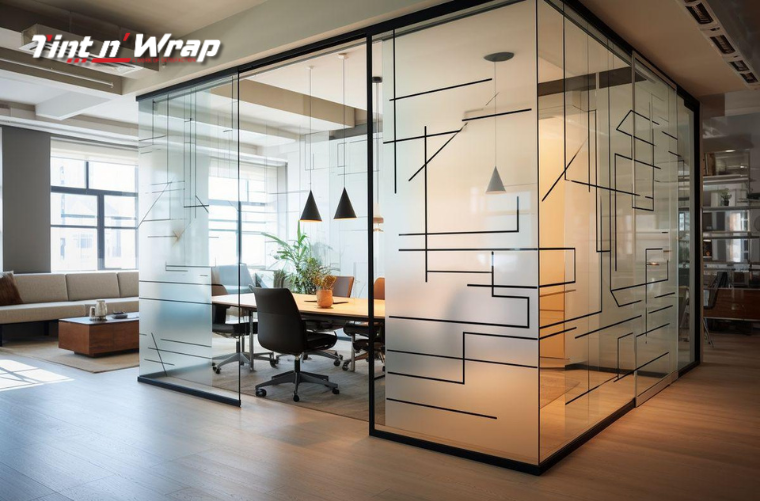
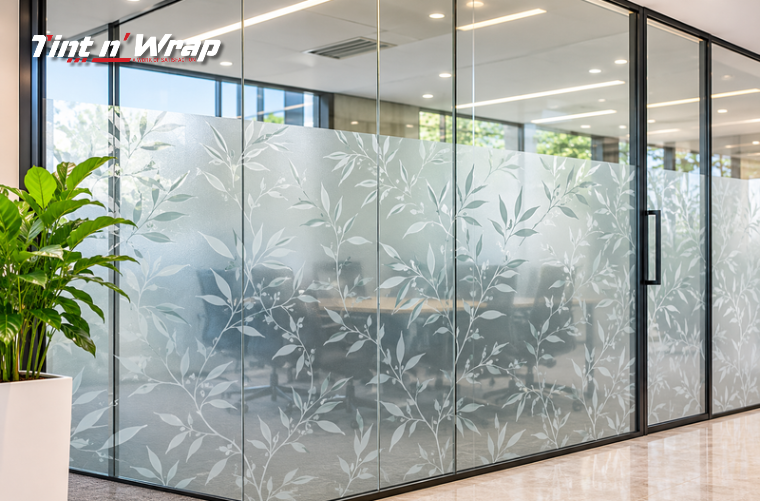
Common options include:
Patterned Film
Geometric shapes, lines and repeating patterns that add visual detail to glass surfaces.
Gradient Film
Gradually changing transparency that provides partial visual screening while maintaining a sense of openness.
Printed Film
Custom graphics, text or company logos can be incorporated into the design to reflect a business’s brand identity.
Custom Decorative Film
Customised colours, patterns and visual effects designed to match the interior style and glass dimensions of a particular project.
For offices looking to create a distinctive environment or incorporate branding into their interior design, Decorative Film offers greater creative flexibility.
4. Frosted Film vs Decorative Film: Which Should You Choose?
Neither option is necessarily better than the other. The right choice depends on the intended function and design requirements.
| Comparison | Frosted Film | Decorative Film |
|---|---|---|
| Main purpose | Visual privacy | Interior decoration and design |
| Appearance | Simple, frosted finish | Various patterns and designs |
| Design options | Relatively simple | Colours, textures, printing and custom designs |
| Light transmission | Depends on film and coverage | Depends on design and material |
| Branding | Basic logos or markings | More extensive brand integration |
| Common applications | Meeting rooms and office partitions | Commercial spaces, reception areas and branded interiors |
If the main requirement is visual privacy with a clean and simple appearance, Frosted Film is usually sufficient.
If the glass partition also needs to contribute to interior decoration, visual identity or company branding, Decorative Film offers more possibilities.
The two can also be combined. For example, a meeting room can feature frosted sections with a customised company logo or graphic design.
5. What Should You Consider Before Installing Decorative Film?
The final appearance of decorative film depends not only on the material, but also on proper planning and installation.
1. Glass Dimensions and Coverage
Accurate glass measurements are essential before installation. For projects involving multiple glass panels or continuous patterns, the design alignment between panels should also be planned.
2. Privacy Requirements
A narrow frosted strip provides only partial visual screening. If greater privacy is required, the coverage area and suitable film type should be considered carefully.
3. Design and Interior Coordination
Colours, patterns and textures should complement the office’s interior style, furniture and lighting. For custom printed designs, artwork, dimensions, proportions and installation positions should be confirmed in advance.
4. Installation Quality
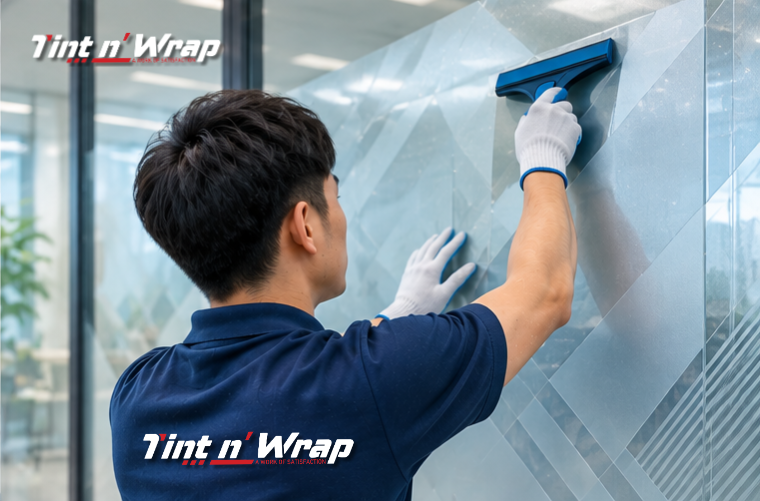
Glass cleaning, accurate cutting, pattern alignment and edge finishing all affect the final result. Custom designs involving company logos or continuous patterns require careful planning and professional installation.
6. Make Glass Part of Your Interior Design
Glass partitions do not always need to remain completely transparent.
With Frosted Film or Decorative Film, existing glass can be enhanced with greater visual privacy and a more customised appearance while maintaining the benefits of glass partitions.
Whether it is a simple frosted finish, a modern geometric pattern or a customised design featuring your company branding, the key is choosing a solution that suits the purpose of the space.
Tint n’ Wrap provides professional installation services for Frosted Film, Decorative Film and customised printed window film.

From residential properties and offices to commercial spaces, we help select suitable materials and installation solutions based on actual glass dimensions, space requirements and design preferences.
Planning an office glass partition or looking to improve the privacy and appearance of existing glass?
Contact us to discuss your project.
Tint n’ Wrap
Professional Window Film & Architectural Film Installation

