
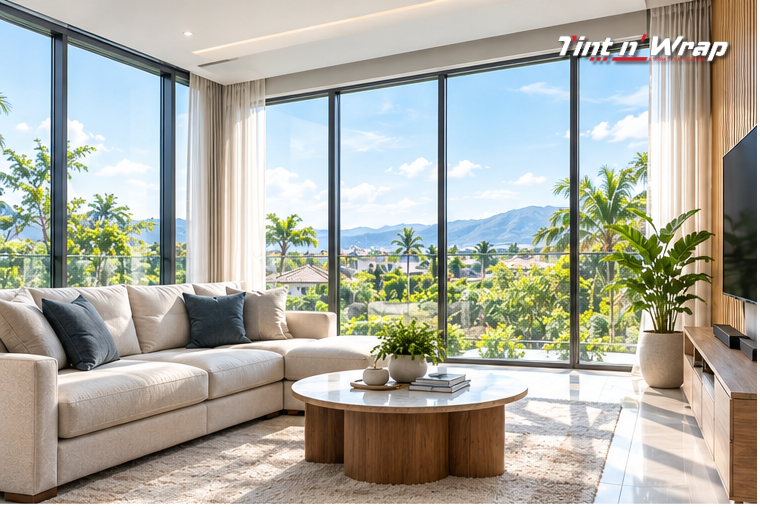
How to Choose Solar Window Film for Your Home: Reduce Heat Without Losing Natural Light
1. Why Do Glass Windows Make Your Home Feel Hot?
In Malaysia, strong sunlight and high temperatures can make indoor spaces uncomfortable, especially in homes with large glass windows, floor-to-ceiling glazing or west-facing windows.
Many homeowners use curtains or blinds to block sunlight. While this can reduce direct sunlight, it also limits natural daylight and outdoor views.
Solar window film offers another option. Applied directly to glass, it is designed to manage solar energy entering the home, helping reduce solar heat gain while maintaining a suitable level of natural light.
Different films use different materials and technologies to achieve this.
For example, magnetron sputtering films use deposited functional metal layers to manage solar energy, while ceramic films use specialised ceramic materials to control selected portions of solar radiation.
The actual performance depends on the film’s construction and specifications. Therefore, choosing the right product requires more than simply looking at its colour or appearance.
2. Does Darker Window Film Always Provide Better Heat Rejection?
Not necessarily.
Darker window film generally allows less visible light to pass through, but this does not automatically mean it rejects more solar heat.
Some lighter films use advanced solar-control technology to provide effective heat management while maintaining higher levels of natural daylight.
When comparing solar window films, two important measurements are worth understanding.
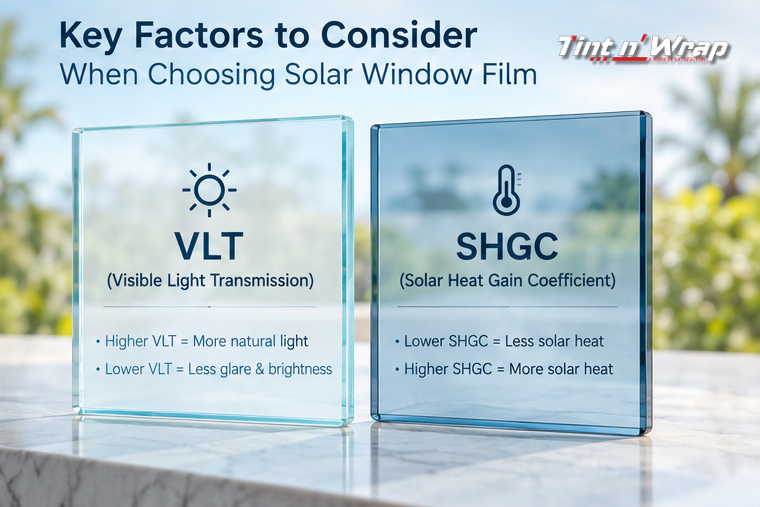
Visible Light Transmission (VLT)
VLT measures the percentage of visible light that passes through a glazing system.
Higher VLT: More natural daylight enters the room.
Lower VLT: Less visible light enters, which may help control excessive brightness.
For homeowners who want bright interiors and clear outdoor views, choosing an appropriate VLT level is important.
Solar Heat Gain Coefficient (SHGC)
SHGC measures the fraction of incident solar radiation that enters a space through a glazing system, including directly transmitted energy and absorbed energy released inward.
Lower SHGC: Less solar heat enters the room.
Higher SHGC: More solar heat enters the room.
In simple terms, VLT helps you understand how much visible light passes through, while SHGC helps you assess how much solar heat enters the space.
When comparing product data, make sure the figures use comparable test methods. Film-only performance figures may not represent the performance of the complete glass-and-film system.
The goal is to find the right balance between heat rejection, glare control and natural daylight, rather than choosing the darkest film available.
3. How Should You Choose Window Film for Different Rooms?
Different rooms have different sunlight conditions and comfort requirements. Using the same film throughout the entire house may not always be the best solution.
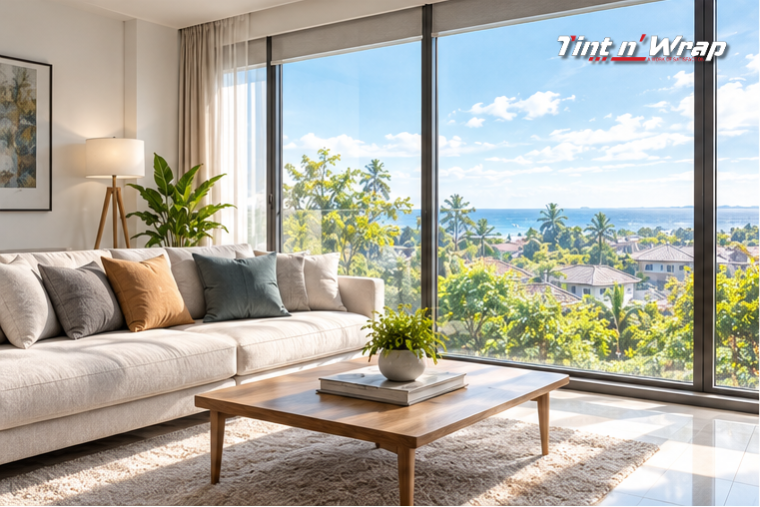
Living rooms: Balance heat control and daylight
Living rooms often benefit from natural light and clear outdoor views. A film with suitable solar-control performance and VLT can help manage heat without making the space unnecessarily dark.
Bedrooms: Consider sunlight exposure and comfort
Bedrooms exposed to direct sunlight may benefit from solar-control film. The appropriate choice depends on the window’s orientation, the time of day when sunlight enters and your preferred indoor brightness.
Home offices: Manage glare
Direct sunlight can create reflections on computer screens and make working less comfortable. Suitable window film may help reduce excessive glare, although the results depend on sunlight direction, screen position and film performance.
West-facing windows: Focus on afternoon sunlight
West-facing windows often receive strong afternoon sunlight in Malaysia. If a particular room becomes uncomfortable during this period, these windows may be a useful starting point for assessing potential improvements.
Instead of automatically applying the same film to every window, prioritise the areas where heat and glare are most noticeable.
4. Why Should Your Glass Be Assessed Before Installation?
Window film performance depends not only on the product but also on its compatibility with the existing glass.
Different glazing types, including standard, tempered, laminated and double-glazed glass, can respond differently to solar radiation and heat. Certain film-and-glass combinations may increase thermal stress and the risk of glass breakage.
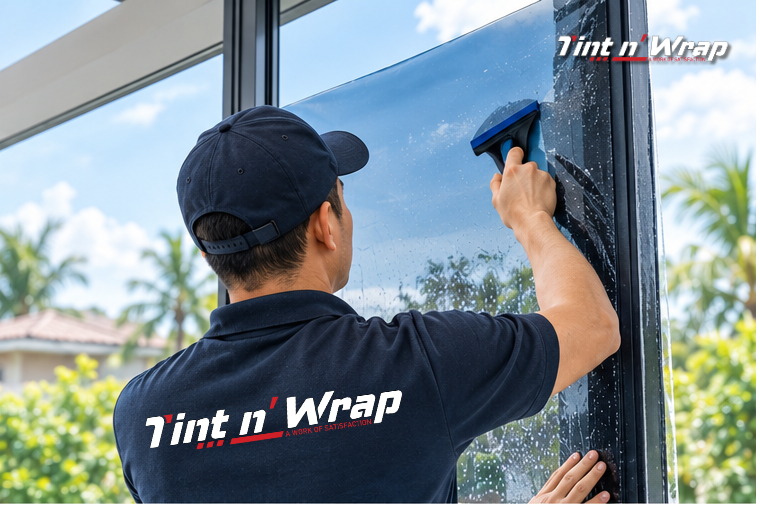
Before installation, several factors should be considered:
Glass type and condition: Determine whether the existing glazing is suitable for the proposed film.
Window orientation: Assess sunlight direction, exposure and surrounding shade.
Film specifications: Compare VLT, solar-control performance and other relevant product data.
Installation conditions: Consider window size, accessibility and site requirements.
Professional installation also involves thorough glass cleaning, accurate film cutting, careful application and appropriate aftercare guidance.
Selecting a suitable film and following the correct installation process helps achieve a neat finish while taking the property’s glazing requirements into account.
5. How Can You Make the Right Choice?
When selecting residential window film, avoid focusing only on the darkest appearance, the biggest advertised performance number or the lowest price.
Start by identifying the main problem you want to address. Is it afternoon heat, excessive glare, uncomfortable indoor temperatures or the need to maintain natural daylight?
Next, consider the glass type, window orientation, VLT, SHGC and product compatibility.
These factors provide a more practical basis for comparing options and selecting a solution that suits your home.
Conclusion: Find the Right Balance Between Heat Control and Natural Light
Solar window film is not simply about making windows darker. It is about managing solar heat and glare while maintaining the level of natural daylight you want in your home.
For Malaysian homes exposed to strong sunlight, especially those with large glass windows or west-facing glazing, selecting a suitable film can be a practical step towards improving indoor comfort.

At Tint n’ Wrap, we provide professional window film installation services for residential and commercial properties. We assess your requirements, consider your existing windows and help you identify a suitable film solution for your space.
Looking for solar window film for your home in Malaysia?
Contact Tint n’ Wrap to discuss your window conditions, sunlight exposure and installation requirements.

